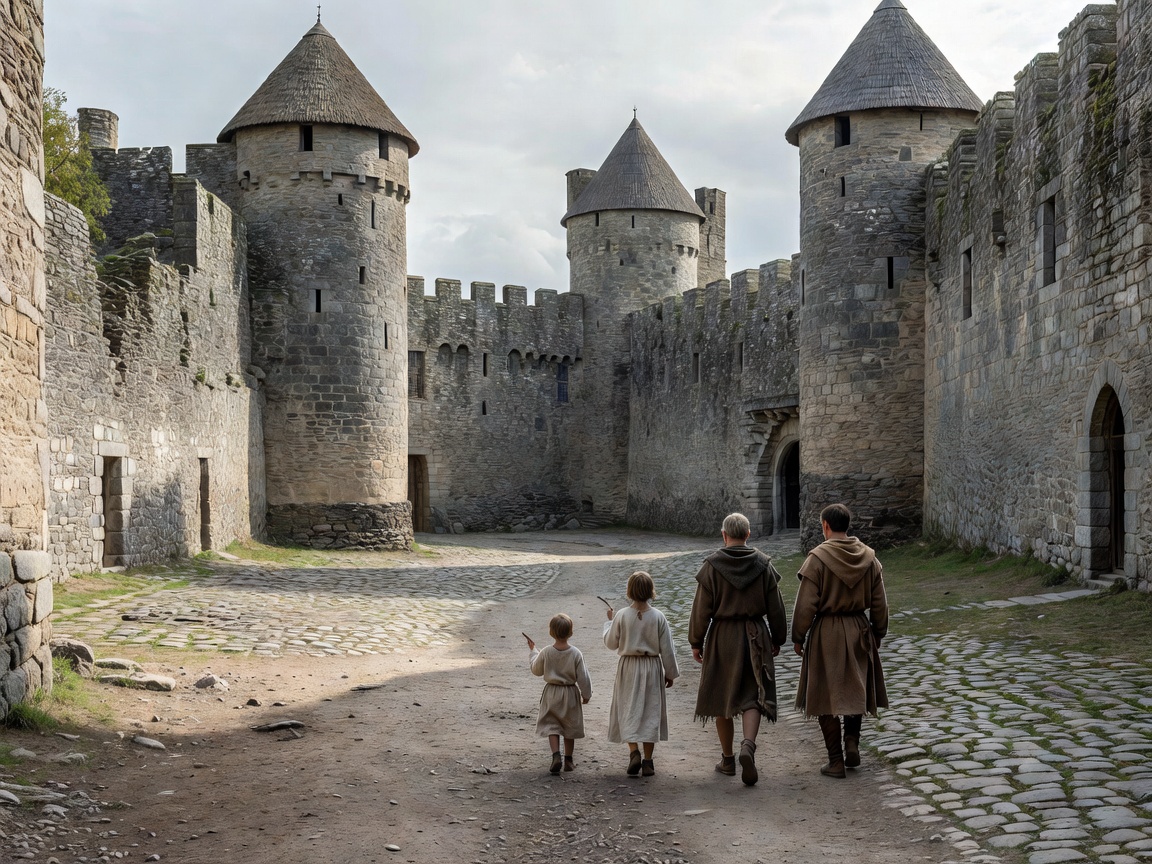
Castle visits can combine architecture, open space and interpretation. They can also involve uneven ground, stairs and exposed paths. Choose a site by its visit format, not only its silhouette.
Read the layout first
A castle may include a courtyard, gatehouse, wall walk, tower, interior rooms and outer grounds. These areas do not always connect through an easy route. Check the visitor map or access information for stairs, slopes, narrow passages and surface changes.
Courtyards give children room to pause and orient themselves. Towers and wall walks add a clear destination, but often include steep or tight staircases. Historic interiors offer objects and architectural details in a sheltered setting. Some routes combine all three, so estimate the total distance before starting.
Family trails and interpretation panels can help children notice building features. Look for route length, age guidance, activity formats and whether materials are self-guided. These are selection criteria, not a guarantee that a particular activity is available. Confirm details with the venue.
Large complex or compact fortification?
Large castle complex
More areas to explore. It may include rooms, courtyards and multiple routes. Allow time for orientation and breaks. Longer distances, slopes and exposed sections can add effort.
Compact fortified site
A shorter visit can suit limited time or younger walkers. The route may have fewer activity options. Stairs and narrow spaces can still be demanding. Compact does not always mean step-free.
Plan for walking and weather
Measure the visit in route sections rather than relying on a single total duration. Consider the entrance, the main feature, a rest stop and the return. Add time for stopping, reading panels and changing pace. Skip a tower or upper wall if the group is tired or the access conditions do not suit.
- Stairs: Check tower access and any alternative route.
- Surfaces: Look for cobbles, grass, loose stone and thresholds.
- Exposure: Walls and courtyards can offer little shelter from wind, rain or sun.
- Rest: Find out whether seating, shade, toilets and food options are available.
Accessibility information should describe the actual route, not just the entrance. Contact the site if published details do not answer a specific question about mobility, toilets or assistance. Do not assume that all rooms or upper levels are accessible.
Choose interpretation that fits
Children can engage with a castle through a simple task: identify a defensive feature, compare room uses or follow a marked route. Interpretation panels work best when the group can stop safely without blocking a passage. A family trail may offer structure, but its length and reading level matter.
Build in a short activity between indoor and outdoor sections. Invite children to spot changes in stonework or map a route in their own words. Keep the focus on the visible place. Avoid turning a long visit into a race to see every room.
Planning criteria
- Pick a realistic route length for the youngest walker.
- Check stair access, surfaces and weather exposure.
- Confirm current family activity and facility details.
- Set a rest point and a shorter exit option.
Good for
Castles can suit families who like open-air exploration, visible architecture and a clear sense of place. A compact route may work for a short outing. A larger complex can suit groups with more time and energy for multiple areas.
What to know
Historic buildings are not designed to modern access standards. Routes, facilities and activity formats vary. Weather can change how comfortable an outdoor visit feels. Check current information directly, including closures, access arrangements and any age guidance.
Advantages: varied spaces, strong visual features and flexible stopping points. Limitations: stairs, uneven surfaces, exposed routes and limited indoor shelter at some sites.
Useful rule: Plan one main castle route and one optional feature. Keep the optional section genuinely optional.